
Buckhall City Directory Collections
Buckhall research uses a Prince William and Manassas-area shelf, not a standalone Buckhall title. The Ruth E. Lloyd Information Center, known as RELIC, identifies printed, microfilm, map, newspaper, yearbook, and local-record holdings that help place a name in context. Its Roots in Prince William inventory identifies the directory runs below. Search a regional entry against the street, ZIP label, or parcel before deciding that it relates to Buckhall. A Manassas mailing label alone does not establish City of Manassas jurisdiction.
| Collection | Years | Where Held | Access |
|---|---|---|---|
| Manassas-area directories | 1960-1983; 2001 | RELIC Roots inventory | Ask RELIC for the relevant volume |
| Regional directories | 1963-1980 | RELIC Roots inventory | Search Quantico, Dumfries, Triangle, Marumsco, Woodbridge, or Occoquan volumes by area |
| Telephone directories | 1903; 1941; 1951; 1958-1959; 1966-1971; 1973; 1975; 1977-1978; 1980-current | RELIC, Prince William Reliquary, and library research route | Collection inquiry and in-person research |
| Local News Index | 1993 forward; some obituaries from 1970 | RELIC | Volunteer-prepared index, still in progress |
Gaps matter. The source inventory does not identify a complete Buckhall-only run, a named Buckhall reverse directory, or a fully digitized set of local entries. A missing name can reflect regional coverage, an unlisted telephone, a changed route, or a volume not yet checked. Record the volume title and year with every negative result.
Buckhall Regional Directory Shelf
The Roots guide makes the regional nature of Buckhall's printed directory record clear. Manassas-area volumes appear for 1960 through 1983 and 2001. Nearby-place volumes cover 1963 through 1980. Those labels are useful discovery paths, but they are not interchangeable place names. A candidate should be tied back to a county address range, a parcel, a map, or another primary record. The same care separates Buckhall from Buckland, which is a different historic place near the Fauquier County line.
Telephone books add earlier and later snapshots. The holdings begin with the 1903 Manassas and Dumfries Telephone Company directory, then resume in selected county and regional years. The 1903 record is a period network clue, not proof that every Buckhall household had service. For an address that shifts between rural route, road, and modern mailing city, compare the listing with the county street directory and the parcel record rather than forcing every result into a current address.
Note: A regional directory can identify a useful lead, but a county parcel or original record is needed to confirm the Buckhall connection.
Buckhall Directory Research at RELIC
RELIC is the focused local-history room for this work. Its collection includes county government microfilm, family files, cemetery and church material, newspapers, maps, historic photographs, school yearbooks, real-estate atlases, directories, and vital-record resources. The RELIC digital archives add tax lists, early deed and people indexes, maps, newspaper material, funeral-home records, and yearbooks. A digital index may point to a name while the underlying image, microfilm, manuscript, or clerk record supplies the evidence.
RELIC is at Central Library, 8601 Mathis Avenue in Manassas. Published research hours are Monday, Wednesday, and Thursday from 10:00 to 4:00; Tuesday from 1:00 to 7:00; and the first and third Saturday from 10:00 to 4:00. The Roots guide lists 703-792-8380 and relic2@pwcgov.org. Ask staff for the specific year, regional title, telephone volume, or companion source before a visit. The Circuit Clerk Historic Document Room is a separate courthouse archive path and has no full-time genealogy staff, so availability should be confirmed first.
Buckhall Family Preservation Lab
RELIC's 2025 Digital Preservation Lab adds a practical way to preserve privately held family material that may help interpret a Buckhall printed entry. The library-card, appointment-based lab supports scanning photographs, slides and negatives, plus selected film and tape formats. A family label or address note can guide a search, but it remains a personal source until it is checked against a library, map, newspaper, deed, or other custodian record.
RELIC's Digital Preservation Lab announcement shows the county's preservation resource.
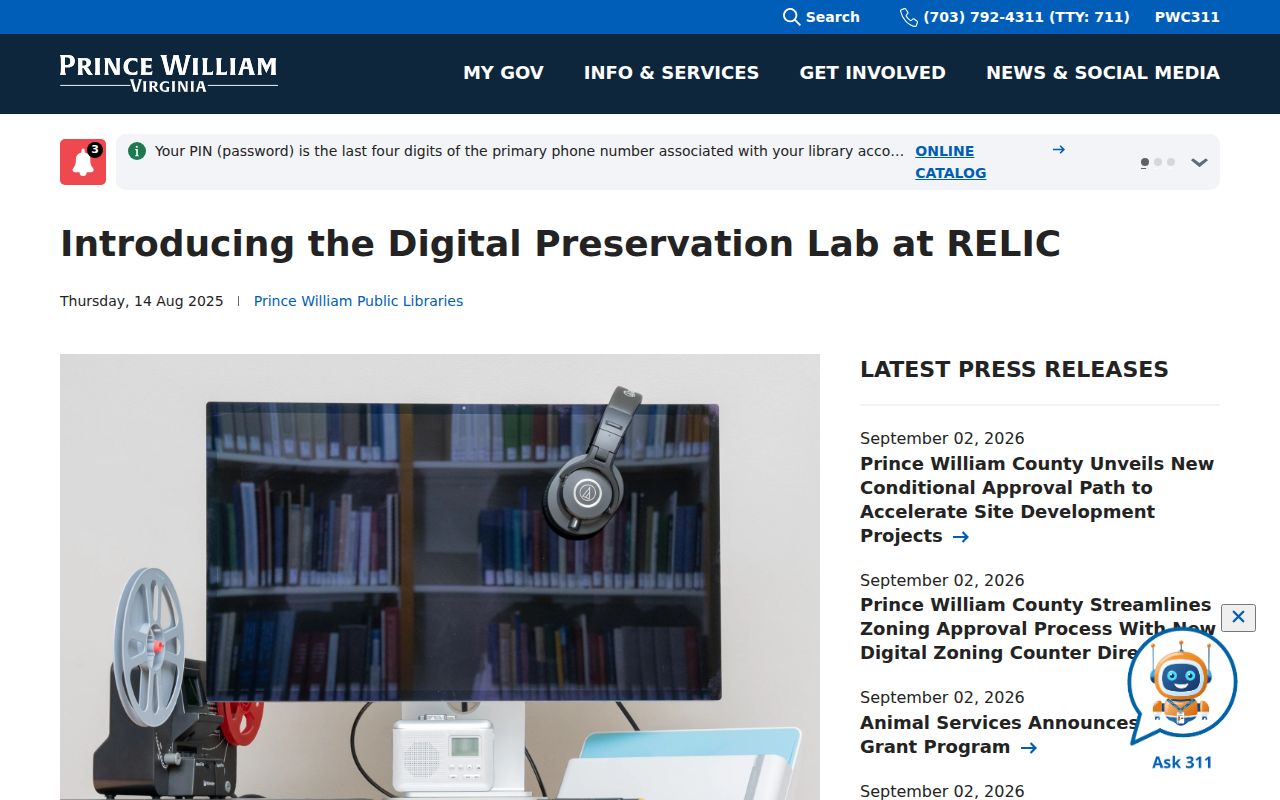
Preserving a label, photo, or old telephone note can keep the date and source context attached while the directory and records trail is checked.
Reading a Buckhall City Directory Entry
No verifiable digitized Buckhall individual entry or printed abbreviation key was captured in the research. That is a reason to inspect the exact volume, not to fill the gaps from another locality's format. Start by photographing or noting the title page, publication year, page number, and the volume's own abbreviation key. Then make a careful inventory of only what appears in that line or address heading.
| Name as printed | Preserve initials, spelling, and any relationship notation exactly as the volume shows them. |
|---|---|
| Address or route | Capture the street, rural route, or locality label, then compare it with the county street directory and map. |
| Directory year and page | These identify the time-specific source and make a later check repeatable. |
| Entry heading | Note whether the person appears in a name sequence or under an address heading, if the inspected volume provides one. |
| Printed symbols | Copy symbols only with the volume's own key. Their meaning was not captured for a Buckhall sample. |
- Criss-cross directory
- An address-order section that can lead from a street number to a listed name. No named Buckhall-specific run was located, so ask RELIC about regional shelves.
- Householder index
- An index arranged around a household or address heading, when the particular volume supplies one. It should be read with the volume year and title.
- Abbreviation key
- The publisher's explanation of shortened words and marks. It belongs to that volume and should be saved with the entry notes.
Not every volume will supply each field. When spelling varies, preserve each printed form instead of silently standardizing it. A useful request identifies the title, year, name variant, locality label, and whether an address-order section is needed. The volume itself remains the authority for its layout and symbols, while a county parcel, deed, map, or vital-record route supplies a separate check. That routine also lets another researcher repeat the same inspection later.
Buckhall Directories and Rural Routes
A familiar modern street number may not appear in an older Buckhall search. RELIC's 1923 Rural Delivery Routes map can explain why a family was described by a route or post-office label instead. The digital archive also holds a 1901 county map, a 1933 highway map, a 1962 Manassas and Prince William map, and later historical maps. Use each map as dated geographic context, not as a legal parcel survey.
Historic address drift can be real even when the same family remained nearby. A road name, number, route, ZIP label, or mailing city can change. Place the directory year beside the map date, then use County Mapper or the recorded parcel trail for a present-day cross-check. The county's Buckhall oral-history material can add a store, school, church, or farm landmark, but oral testimony should be independently confirmed for a date or location.
Buckhall Directory Timeline
The record trail is not a continuous printed series. The known points below show why a household search often needs more than one kind of directory. They also help distinguish a real collection gap from a failed name search.
- 1903: The Manassas and Dumfries Telephone Company directory provides the earliest listed telephone-directory point in the Roots guide.
- 1941-1959: Selected county telephone directories appear for 1941, 1951, and 1958-1959.
- 1960-1983: Manassas-area directory volumes are identified in the Roots inventory.
- 1963-1980: Regional directories cover nearby Prince William communities.
- 1980-current and 2001: Telephone holdings continue from 1980, and a Manassas-area city-directory volume is identified for 2001.
There is no documented first or last printed Buckhall-only directory year because no Buckhall-only run was located. Treat the timeline as a request list for the regional shelf, not as a claim that each volume contains every Buckhall household.
Tracing Buckhall Directories by Household
A directory becomes more useful when each year is treated as a dated snapshot. Begin with a name or a known older address. Preserve spelling changes, initials, route labels, and page references. Pair those snapshots with federal census years, county maps, newspaper notices, and clerk-held records. A person who disappears may have moved, changed a listing style, died, or simply been left out, so do not treat absence as a conclusion.
- Request the earliest regional directory or telephone volume that fits the known name, address, or era.
- Record the title, year, page, printed spelling, and address or route exactly as found.
- Check the next available listed year, noting a move, changed initial, new route, or missing appearance.
- Pair the surrounding directory years with the applicable census release and dated maps rather than assuming a ten-year gap has one answer.
- Use RELIC's Local News Index, obituary material, yearbooks, church or cemetery collections, and the clerk's probate route to test a later change.
For a formal ownership question, use the county parcel and deed path rather than a directory listing. Modern address-keyed work belongs with the Buckhall Street Directory; a historic name found here can then be checked through a current record using the resident lookup route.
Buckhall Directory Evidence Limits
Printed directories and telephone books are useful leads, not complete resident rolls. The research did not verify a Buckhall-specific publisher, a full digital run, or a sample entry's symbol key. County boundaries, postal labels, and the City of Manassas are separate geographies. Keep each result tied to the source title, year, place label, and page. That detail helps avoid a false match between Buckhall, Manassas, and Buckland.
When a volume ends, the documented fallback chain is RELIC staff and catalog help, digital archives, the Circuit Clerk Historic Document Room, HOP, and Library of Virginia microfilm for older county material. Use a custodian's copy or research route when a record requires it. Personal historical research must never be used to stalk, harass, or harm another person.